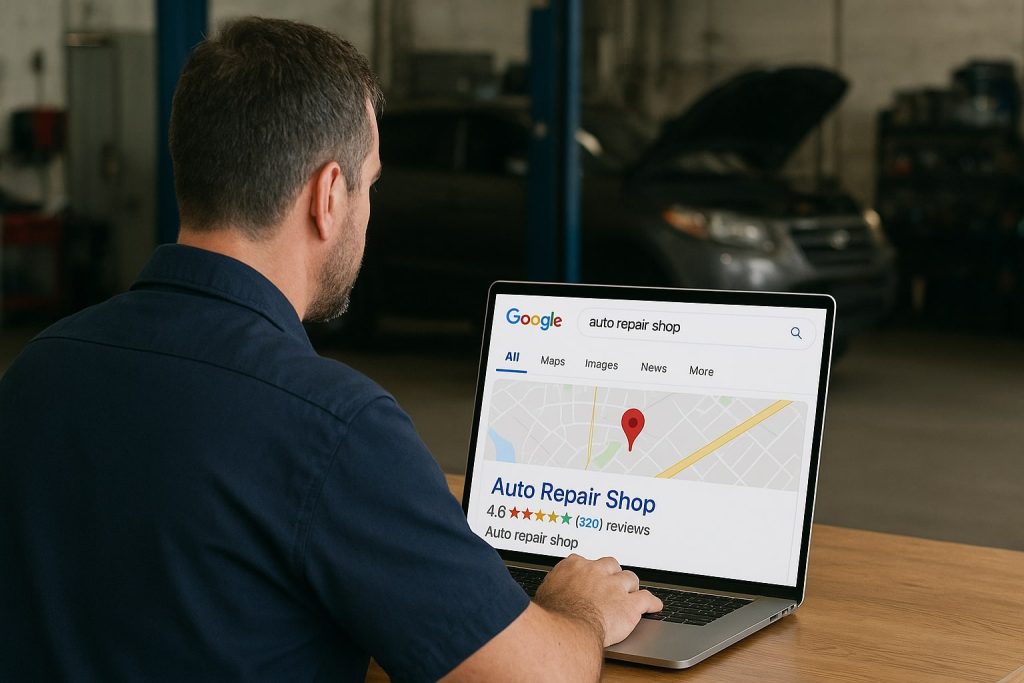
A strong Google Business Profile for auto repair shops makes location, services, hours, proof, and contact paths obvious before a driver visits the website. It should tell Google what the shop does, show customers whether the shop fits, and send calls into a measurable follow-up process. Google describes Business Profile as a free way to […]
Negative Keywords Every Auto Shop Should Use in Google Ads
Running Google Ads for auto repair shops is like tuning a high-performance engine—precision matters. One wrong move, like letting irrelevant clicks drain your budget, can stall your campaign. That’s where negative keywords come in: they’re your filter, blocking searches that don’t lead to paying customers. Below, I’ll share a must-have list of negative keywords every […]
7 Top Choices for Auto Repair Shop Website Design
Let’s be blunt: your website is your digital front door. It’s often the very first interaction a potential customer has with your shop. If that site is clunky, outdated, or hard to use, it’s not just a bad look—it’s actively costing you money. A bad website fails to turn visitors into booked appointments. If your […]
Auto Repair Marketing Software: Stack Guide for Booked Jobs
Quick answer: Auto repair marketing software should help a shop capture demand, identify the source, follow up with the right customer, build reviews, recover missed opportunities, and report booked jobs. Start with the leak you can prove: call attribution, weak CRM follow-up, low review volume, poor retention, or unclear source-to-repair reporting. Buy the tool that […]
What Top Repair Shops in Your City Are Already Doing to Win More Customers
In the cutthroat world of auto and truck repair, standing out means mastering digital visibility and customer retention. At Element DMA, we’ve studied top-performing shops in cities like New York, Chicago, and Los Angeles, and they’re driving 30% more calls with three proven strategies. Here’s how you can follow suit and dominate your local market. […]
Auto Repair Scheduling Software: A Booking-to-Bay Guide
Auto repair scheduling software should turn a call or online request into a confirmed appointment that fits real shop capacity. The right system handles service duration, vehicle details, wait versus drop-off visits, resource limits, reminders, changes, and the repair-order handoff. A requested time might mean vehicle drop-off, technician start, diagnostic review, or promised completion. Software […]
Track Marketing Calls: Service Advisor Playbook for Repair Shops
A tracking number can show that a call came from Google Ads, organic search, Google Business Profile, a mailer, or a referral. It cannot greet the caller, understand the vehicle concern, set a realistic expectation, or secure the next step. That work still happens at the front counter. To track marketing calls properly, an auto […]
Affordable CRM for Auto Repair Shops: First-Caller Follow-Up
Quick answer: An affordable CRM for an auto repair shop is a shared follow-up system that the front desk can keep accurate during a normal workday. For first-time callers, it only needs to capture the vehicle, repair need, call outcome, responsible advisor, and next action. Start with that workflow in the software you already have. […]
A practical collection of auto repair slogans
Most auto repair slogans sound interchangeable because they start with a clever phrase instead of a real reason to choose the shop. Drivers do not need another promise that a shop is the best. They need a quick reason to believe the shop understands the problem, can handle the work, and will explain what happens […]
Pricing Strategies for Auto Repair Shops: How to Set Prices, Use Anchor Packages, Upsell, and Leverage Discounts
Hey, auto repair shop owners! Setting prices isn’t just about covering costs—it’s about building trust, boosting conversions, and keeping customers coming back. In the $70 billion US auto repair market (IBISWorld, 2025), your pricing strategy can make or break your shop’s success, whether you’re fixing sedans or semi-trucks. Get it right, and you’ll see 15–30% […]