

Google Business Profile for Auto Repair Shops: Setup Checklist
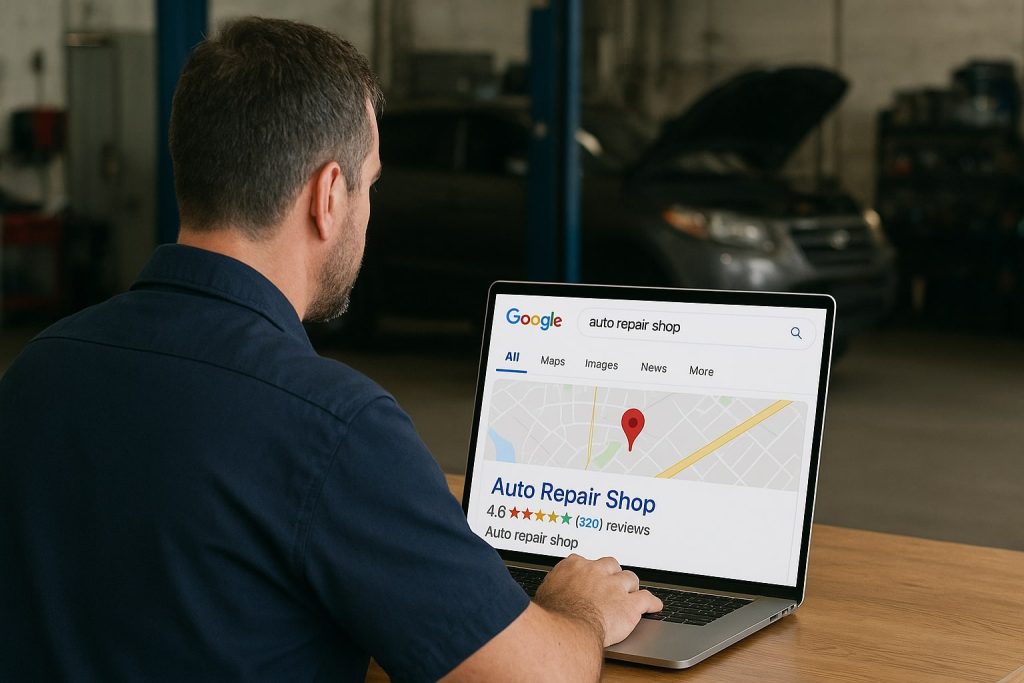
A strong Google Business Profile for auto repair shops makes location, services, hours, proof, and contact paths obvious before a driver visits the website. It should tell Google what the shop does, show customers whether the shop fits, and send calls into a measurable follow-up process.
Google describes Business Profile as a free way to appear on Search and Maps, show photos, manage reviews, list services, define service areas, and understand calls, bookings, and search terms through performance insights (Google Business Profile). For repair shops, those fields are the first sales screen many drivers see when they search for oil changes, brakes, diagnostics, tires, inspections, fleet service, or emergency repair.
The old habit of claiming a profile, adding photos, and waiting for calls is thin now. Customers compare several shops at once. A profile cannot change location, but it can make relevance clearer.
Contents:
- Start With the Fields That Decide Fit
- Choose Categories and Services Like a Repair Order
- Build a Profile That Looks Like a Real Shop
- Use Reviews and Questions Without Shortcuts
- Connect the Profile to Local Pages and Calls
- Run a Monthly Google Business Profile Auto Repair Checklist
- Common GBP Mistakes That Cost Repair Calls
- FAQ
- Make the Profile Easier to Trust and Easier to Act On
Start With the Fields That Decide Fit
Google’s Business Profile materials emphasize keeping address, hours, contact information, services, photos, reviews, and booking paths current (Google Business Profile). For an auto repair shop, accuracy starts with the fields that prevent bad calls: name, address, phone number, website, appointment link, primary category, service categories, services, hours, special hours, and business description.
Use the real-world shop name. Do not add phrases such as best brake repair near me unless those words are part of the legal or signage name. Google guidance for representing a business emphasizes accurate names, addresses, and service areas, and profile-name stuffing can create verification and trust problems. A customer should see the same shop identity on the storefront, invoice, website, appointment page, and profile.
Set the address based on how customers interact with the business. A shop with bays, signage, and a front desk usually needs the visible storefront address. A mobile mechanic or roadside repair operation may need a service-area setup instead of showing a private address. Service areas should reflect real dispatch coverage.
| Profile field | Shop-specific setup | Why it matters |
|---|---|---|
| Business name | Exact public shop name used on signs, invoices, website, and legal listings. | Protects trust and avoids name-stuffing problems. |
| Primary category | Choose the broadest true category, usually Auto repair shop for a general repair facility. | Gives Google the clearest relevance signal. |
| Secondary categories | Add only major services the shop actually performs, such as Brake shop, Oil change service, Tire shop, Transmission shop, or Auto electrical service. | Helps match real repair intent without confusing the profile. |
| Hours and special hours | Keep regular hours, holiday closures, early drop-off, weekend hours, and emergency availability current. | Prevents wasted calls and bad reviews from drivers who arrive at the wrong time. |
| Website and appointment links | Send visitors to the most relevant page: home, appointment page, or a service page for specific booking paths. | Moves searchers from Maps into a controlled conversion flow. |
Choose Categories and Services Like a Repair Order
Categories should describe the business model first and specialty work second. A general independent shop should normally start with Auto repair shop, then add secondary categories only when those services are substantial enough to deserve visibility. A transmission-only business, tire dealer, auto body shop, diesel repair shop, or RV repair operation may need a different primary category because the core customer problem is different.
Do not add every category that sounds related. Category mismatch can create the wrong calls, dilute service fit, and make the profile look less credible to customers comparing options.
Services should read like the jobs the service advisor wants more often. Add the work the shop can price, explain, schedule, and complete. For most repair shops, that means separating brakes, oil changes, diagnostics, AC repair, suspension, tires, inspections, check engine light, battery replacement, fleet maintenance, and pre-purchase inspection when those are real offers.
| Category | Use when | Avoid when | Website proof |
|---|---|---|---|
| Auto repair shop | General repair is the core business. | The shop is mainly collision, tires, or transmission. | Home and main service pages. |
| Brake shop | Brake work is a major booked service. | Brakes are occasional add-on work. | Brake repair page. |
| Oil change service | Maintenance visits are actively sold. | The shop wants mostly diagnostic or repair work. | Oil change or maintenance page. |
| Tire shop | Tires, rotation, balancing, or alignment drive sales. | Tires are rare convenience work. | Tire or alignment page. |
| Transmission shop | Transmission diagnosis and repair are core. | The shop only refers transmission work out. | Transmission service page. |
| Auto electrical service | Diagnostics, wiring, batteries, or electrical work are accepted. | Electrical work is limited to basic testing. | Diagnostics/electrical page. |
| Diesel engine repair service | Diesel trucks or vehicles are a real specialty. | The shop only handles light gas vehicles. | Diesel repair page. |
| Auto body shop | Collision, paint, body, or dent repair are core. | The shop is mechanical repair only. | Collision/body page. |
| RV Repair Shop | RV, camper, or motorhome repair is staffed and scheduled. | The shop only performs normal passenger-car work. | RV repair page. |
| Truck repair shop | Medium-duty or truck work is a target service. | The shop cannot fit or service trucks. | Truck repair page. |
Categories and services work best when the website confirms them. A brake service listed in the profile should point to a brake page, a diagnostic service should point to a diagnostic page, and a fleet maintenance offer should have a page or section that explains fleet fit. Shops that need a broader local visibility system can connect this setup to local SEO for auto repair shops. Shops that also need service-page structure can use SEO for auto repair shops as the next step.
Build a Profile That Looks Like a Real Shop
Photos are proof. Google says Business Profile can personalize a business on Search and Maps with photos and reviews (Google Business Profile). For repair shops, the most useful media is not a generic car image. It is evidence that the shop is clean, staffed, equipped, and easy to find.
- Exterior photo from the street, including signage and driveway approach.
- Front desk or waiting area so first-time customers know where to enter.
- Service bays with clean, realistic shop activity.
- Team photos with permission, especially owner, service advisors, and technicians.
- Equipment proof such as lifts, alignment rack, tire machines, diagnostic tools, EV equipment, or diesel tooling.
Set a simple cadence. Add or refresh photos monthly, not only during a redesign. Remove images that show old branding, closed entrances, outdated hours, cluttered bays, unsafe work, unreadable signs, or service offers the shop no longer wants. A current profile helps customers decide before calling and gives staff fewer repetitive location and expectation questions.
Use Reviews and Questions Without Shortcuts
Reviews influence whether a driver trusts the shop enough to call. The strongest review program is simple: ask real customers after completed work, make the link easy to find, respond to every review, and never filter requests so only happy customers receive them. A repair shop should avoid incentives, review gating, employee reviews, fake customer accounts, and aggressive scripts that pressure people.
Responses should sound like a service advisor, not a legal department. Thank positive reviewers by referencing the type of visit when appropriate. For negative reviews, acknowledge the concern, avoid arguing over private details, and invite the customer to continue the conversation through the shop’s normal support channel. Useful replies show future customers that the shop is attentive even when a job was not perfect.
Questions around profiles are changing. Google’s My Business Q&A API was discontinued on November 3, 2025, so shops should not rely on old automated Q&A posting workflows (Q&A API change log). At the same time, Maps is becoming more conversational through Ask Maps and other AI-driven place experiences; see the Google Maps update. That makes clear profile facts, service pages, reviews, and photos more important because Google can draw from many public signals when people ask complex local questions.
| Customer question | Profile or page answer to prepare | Call-quality value |
|---|---|---|
| Do you handle check engine lights today? | List diagnostics as a service, show hours, and link to the appointment path. | Filters urgent diagnostic calls into the right schedule. |
| Can you work on my European car? | Only mention European, diesel, hybrid, fleet, RV, or truck work if the shop truly accepts it. | Prevents mismatched calls and protects credibility. |
| How much is a brake job? | Explain inspection-first pricing and what affects the estimate on the brake page or FAQ. | Reduces price-only calls and sets better expectations. |
| Can I drop off before opening? | State early drop-off, key box, shuttle, loaner, or pickup details where available. | Turns convenience questions into booked appointments. |
| Are you near me or do you come to me? | Use storefront or service-area setup accurately and connect city/service pages where relevant. | Reduces confusion for mobile, roadside, and multi-location operations. |
Keep deeper question work connected to the website. A profile can answer simple fit questions, but service pages and FAQs should hold the fuller explanation. For a practical search-to-call workflow, use the guide on how to turn Google questions into better auto repair leads.
Connect the Profile to Local Pages and Calls
The profile should not be isolated from the website. Link the website field to the page that best helps a customer take action. Single-location shops often use the home page or appointment page. Shops with strong service pages can test direct links for priority work, such as brake repair, oil changes, tires, diagnostics, or fleet maintenance, as long as the page matches the profile service.
Location relevance should be visible but honest. A shop can explain its neighborhood, nearby landmarks, parking, pickup and drop-off details, shuttle routes, and real service area. It should not publish dozens of thin city pages that promise service in places it does not meaningfully serve. The profile, website, title tags, service pages, and staff call scripts should all describe the same market.
Measurement needs to be practical. Google says profile insights can show calls, reviews, bookings, and how customers find the business (Google Business Profile). That is useful, but it is not the same as knowing whether calls became booked repair orders.
- Track calls from the profile separately when possible.
- Mark missed calls, booked appointments, price-only calls, spam, after-hours calls, and wrong-service calls.
- Review the first five call outcomes every week before making broad SEO decisions.
- Compare profile calls with appointment-page submissions and website calls.
- Feed recurring service questions back into the relevant profile services, website FAQs, and service advisor scripts.
Published Element DMA proof matches this pattern. In the MPB Auto Repair case study, Google Business Profile work was tied to CallRail tracking, review replies, monthly updates, 115 average GBP calls per month, 2,500 average GBP views per month, and review growth from 54 to 105. Repair shops that want profile actions tied to real lead quality can book a consultation.
Run a Monthly Google Business Profile Auto Repair Checklist
A profile gets weaker when nobody owns it. Assign one person to review it monthly, with a shorter weekly rhythm for reviews and urgent updates.
- Confirm name, address, phone number, website link, appointment link, and hours.
- Check holiday hours, early drop-off notes, emergency availability, and temporary closures.
- Review primary and secondary categories for accuracy.
- Add or clean up services based on jobs the shop wants and can perform.
- Upload current photos of exterior, entrance, waiting area, staff, bays, and priority services.
- Reply to every new review and flag policy-violating content through the proper Google process when needed.
- Check profile performance for search terms, calls, website clicks, booking actions, and directions.
- Compare calls with booked appointments and note which service lines produce quality leads.
Use the monthly review alongside a broader auto repair SEO checklist and a lean tool stack for local SEO tips for auto repair shops. The profile is one control surface, not the entire marketing system.
Common GBP Mistakes That Cost Repair Calls
- Using a stuffed business name that does not match real signage.
- Choosing categories or services the shop barely performs.
- Leaving hours, closures, photos, reviews, or appointment paths stale.
- Judging success only by views instead of qualified calls and booked work.
FAQ
What should an auto repair shop put in Google Business Profile?
Start with the exact shop name, address or service area, phone number, hours, appointment link, primary category, secondary categories, services, photos, business description, review replies, and current updates. The best profile explains what the shop does and how a driver can take the next step.
What is the best primary category for a general auto repair shop?
For most full-service independent repair facilities, Auto repair shop is the clearest primary category. Specialty businesses should choose the category that matches their main business, such as Transmission shop, Tire shop, Auto body shop, or Oil change service when that is the core offer.
How often should a repair shop add photos?
Monthly is a workable cadence for most shops. Add new exterior, team, bay, and service photos often enough that the profile looks current. Update sooner after signage changes, remodeling, new equipment, seasonal service changes, or new location details.
Can a mobile mechanic use Google Business Profile?
Yes, but the profile should represent how the business serves customers. A mobile mechanic often needs a service-area setup and clear service limits instead of showing a private address. The website and profile should agree on where the mechanic travels and which jobs are accepted.
Can a repair shop use service areas to rank in nearby cities?
Service areas should describe real coverage, not every city the shop wants to win. A storefront shop should prove nearby-city relevance through useful service pages, real customer reviews, photos, and clear pickup, drop-off, or dispatch details instead of thin city targeting.
How should a shop measure profile success?
Measure profile calls, appointment clicks, website clicks, direction requests, booked jobs, missed calls, wrong-service calls, and repeat questions. Views alone are not enough. A profile is working when it produces more qualified conversations and booked repair orders.
Make the Profile Easier to Trust and Easier to Act On
A repair shop’s profile should reduce uncertainty. The customer wants to know whether the shop is nearby, open, real, trusted, able to handle the repair, and easy to contact. The owner wants to know whether profile activity is producing the right calls. When those two needs are designed together, Google Business Profile for Auto Repair Shops becomes a working local lead asset instead of a static listing.