Advertising is a critical tool for auto repair shops in the USA to attract customers and grow revenue. However, many shops struggle to see results from their ad campaigns, wasting budgets and missing opportunities. With 70% of consumers researching local services online before booking (per Google), poorly executed ads can leave shops lagging behind competitors. […]
Step-by-Step Marketing Strategy for Diesel Repair Shops to Dominate Local Markets
Diesel repair shops in the USA face fierce competition, with local rivals, chain shops, and online platforms vying for customers. To become the #1 diesel shop in your local market, a strategic marketing plan is essential. With 70% of consumers researching local services online before booking (per Google), a focused approach leveraging branding, advertising, partnerships, […]
Marketing Trends for Auto Repair Shops: Top Channels, Data, and Tips
Auto repair shops in the USA face evolving challenges and opportunities. With 70% of consumers researching local services online before booking (per Google), digital marketing is essential for driving car count, building trust, and staying competitive. This article analyzes the top marketing trends for auto repair shops, focusing on effective channels—Google Ads, Local Services Ads […]
Essential Website Pages for Auto Repair Shops to Boost SEO and Trust
For auto repair shop owners in the USA, a website is a critical tool to attract customers, build trust, and rank higher in local search results. With over 60% of consumers searching for local services on mobile devices (per Google), a well-structured website can drive calls, bookings, and repeat business. This article explains the essential […]
Facebook Ads for Auto Repair Shops: Analysis, Formats, and Campaign Setup Guide
Facebook Ads, now part of Meta’s advertising platform, offer auto repair shops in the USA a powerful way to connect with local customers, generate leads, and boost bookings. With over 2.8 billion monthly active users on Facebook and 2 billion on Instagram (per Meta), these platforms provide unparalleled reach for small businesses. For auto repair […]
Auto Body Shop SEO: How to Win More Google Maps Estimate Calls
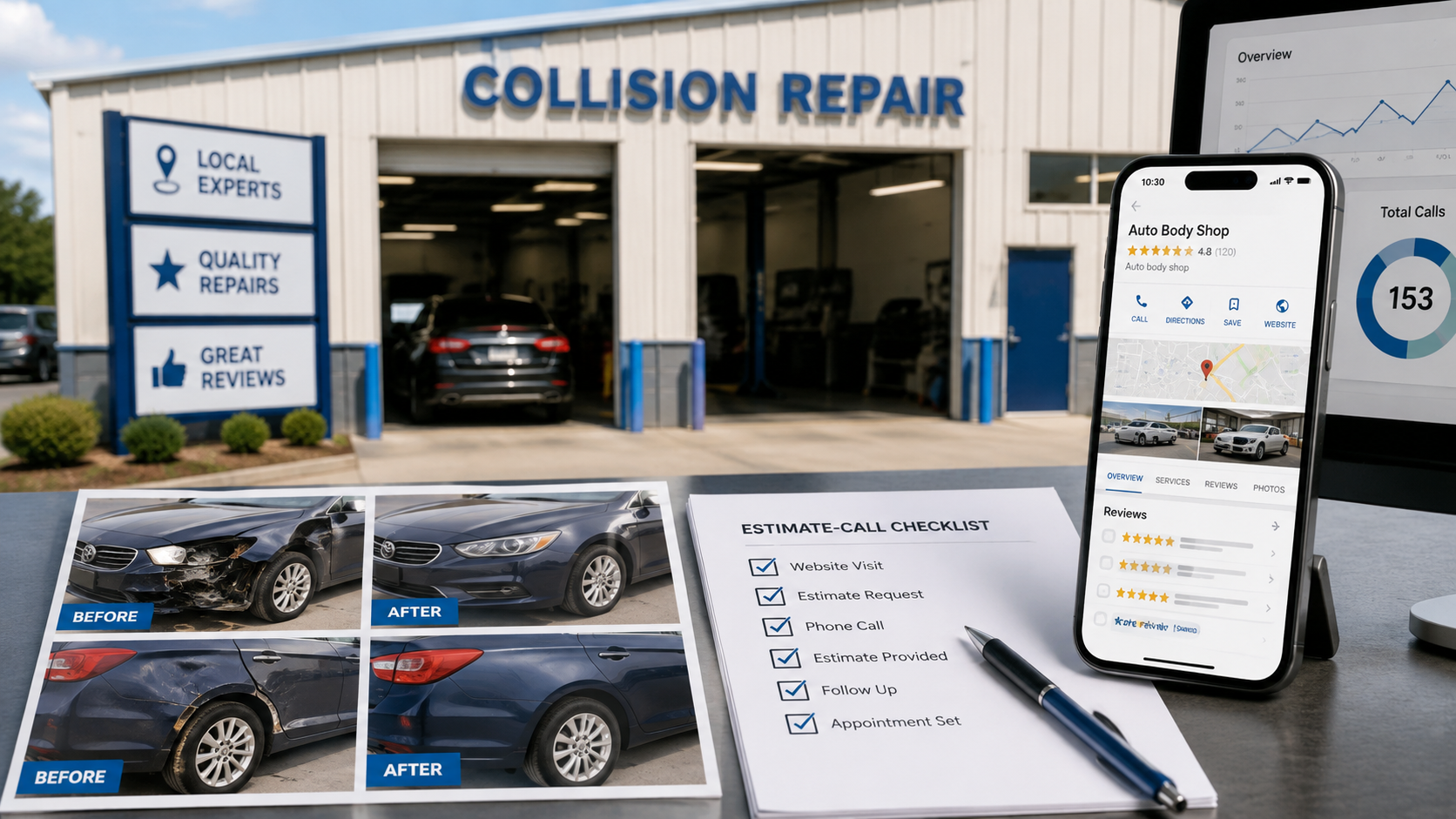
Body shop SEO is not a generic marketing exercise. A driver looking for collision repair is often standing next to a damaged vehicle, comparing nearby shops, checking photos, reading reviews, and deciding who looks credible enough to call for an estimate. That search moment is different from normal maintenance. Collision, dent, paint, bumper, hail, and […]
How to Design an Auto Repair Shop Website That Drives More Calls
For auto repair shop owners in the USA, a website is more than a digital brochure—it’s a powerful tool to generate calls, bookings, and loyal customers. With over 60% of consumers searching for local services on mobile devices (per Google), a well-designed website can set your shop apart from competitors and convert visitors into clients. […]
Auto Repair SEO Checklist: 25 Checks for Local Visibility
An auto repair SEO checklist should verify whether Google and nearby drivers can identify the shop, understand its services, trust its proof, reach it on mobile, and connect a search to a booked and completed job. Start with wrong business information, policy risks, broken contact paths, and missing service pages before expanding content or chasing […]
10 Reasons Auto Repair Shops Waste Budget on Google Ads and How to Fix Them
Google Ads can be a game-changer for auto repair shops in the U.S., driving high-intent customers searching for “auto repair near me” or “brake repair in [city].” However, many shop owners burn through their budgets without seeing meaningful results. According to WordStream, the average cost-per-click (CPC) for auto repair keywords ranges from $5 to $15, […]
How to Get More Customers for Your Auto Repair Shop Without Discounts
Running an auto repair shop in the competitive U.S. market means constantly finding ways to attract new customers without slashing prices. Discounts might bring in a quick influx of clients, but they often erode profit margins and attract price-sensitive customers who don’t stick around.