Our clients’ websites convert 25-40% better than generic shop homepages because we build service-specific landing pages that match exactly what customers are searching for. When someone searches “transmission repair near me” and clicks your ad, they land on a transmission repair page—not your homepage. By the end of this article, you’ll see the exact structure […]
How We Manage Google Business Profile & Local SEO for Our Paying Clients
Our clients rank in the top 3 of Google’s Local Pack within 60-90 days and generate 8+ calls per day from Google Maps alone. One client went from invisible in local search to dominating rankings for “auto repair near me,” “trailer repair near me,” and “truck mechanic near me.” By the end of this article, […]
How We Run Google Ads & Local Service Ads for Our Paying Clients
Our clients average a 50% reduction in cost per lead through Google Ads—from $25-45 per call down to $15-20. That’s not from spending more. It’s from spending smarter. By the end of this article, you’ll see the exact 30-step process we use to set up and optimize Google Ads for auto repair shops, and you’ll […]
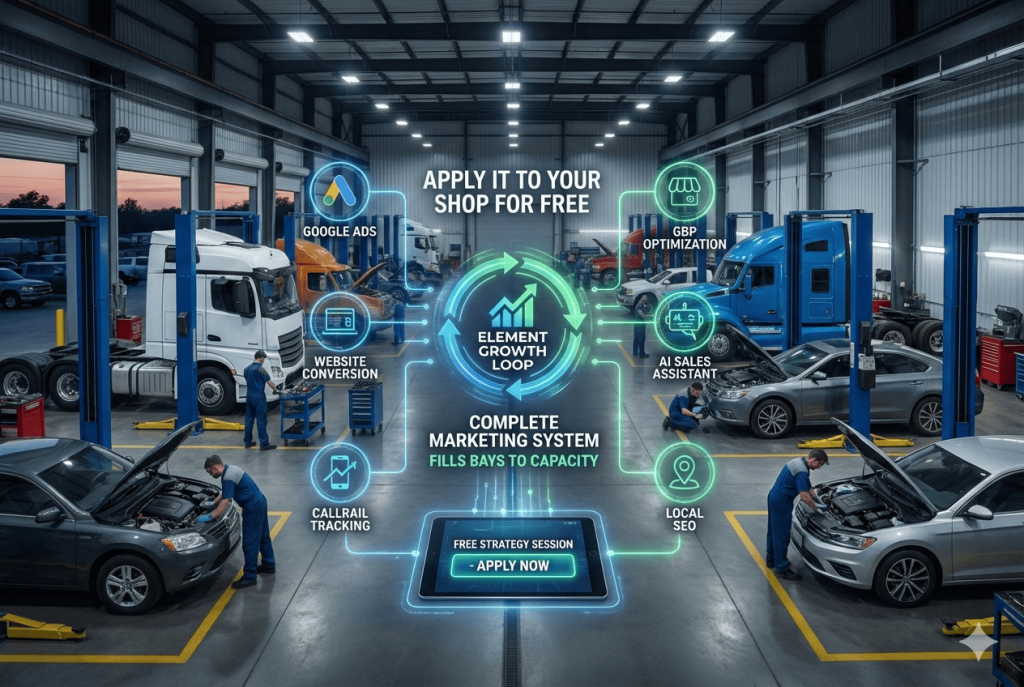
The Complete Marketing System that Fills All the Service Bays of Auto & Truck Repair Shops to Capacity! (And How You Can Apply It to Your Shop for Free)
Shop owners: the EGL AI marketing system brings our clients 100+ qualified calls per bay every month and a 50% reduction in cost per lead. (These are highly qualified calls so 50-60% of them want an appointment). Some examples of our results: These aren’t lucky breaks or one-time wins. They’re the predictable result of our […]
Auto Repair Shop Marketing Ideas That Increase Car Count
Auto repair shop marketing ideas are only useful when they lead to the right outcome: more qualified calls, more booked jobs, better repeat visits, stronger reviews, or higher-value repair orders. A long list of tactics can look impressive, but a shop with limited time needs priorities. The mistake is treating every idea as equal. A […]
How Auto Repair Shop Owners Can Find and Hire A-Level Technicians (Without Wasting $10K on Headhunters)
You’ve spent $10,000 on headhunters. You’ve posted on Indeed, Facebook groups, and every job board you can find. You’ve gotten three leads—none of them local. Meanwhile, your bays are sitting empty, work is backing up, and you’re starting to wonder if skilled A-level technicians even exist in your area anymore. Here’s the uncomfortable truth: they […]
A practical guide to radio advertising for auto repair shops
Radio advertising can put an auto repair shop name in front of local drivers repeatedly, but reach alone does not make it profitable. A station can cover a large area while most listeners live outside the shop’s practical service area. A memorable spot can create interest while the phone line, offer, or landing page makes […]
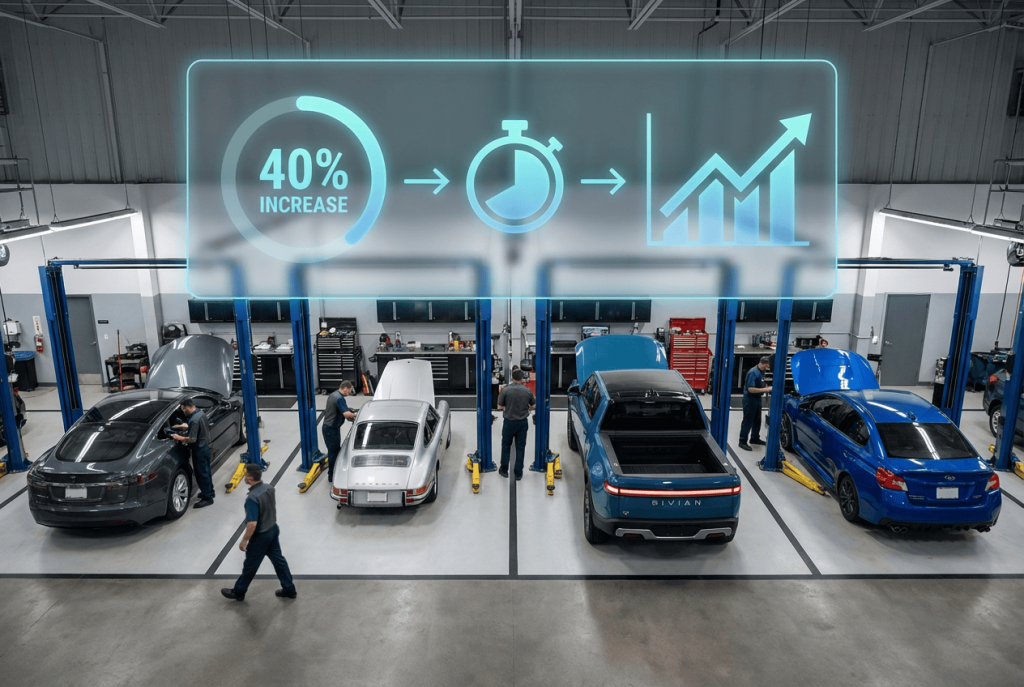
The Operational Blueprint That Increased Bay Efficiency by 40% Without Hiring More Staff
You’ve probably thought about hiring another technician or service advisor to handle the workload—but what if the problem isn’t too few people, it’s too much wasted time? Most auto repair shops operate at 50-60% efficiency. Your technicians spend half their day on non-billable activities: searching for tools, waiting for parts, clarifying work orders, and dealing […]
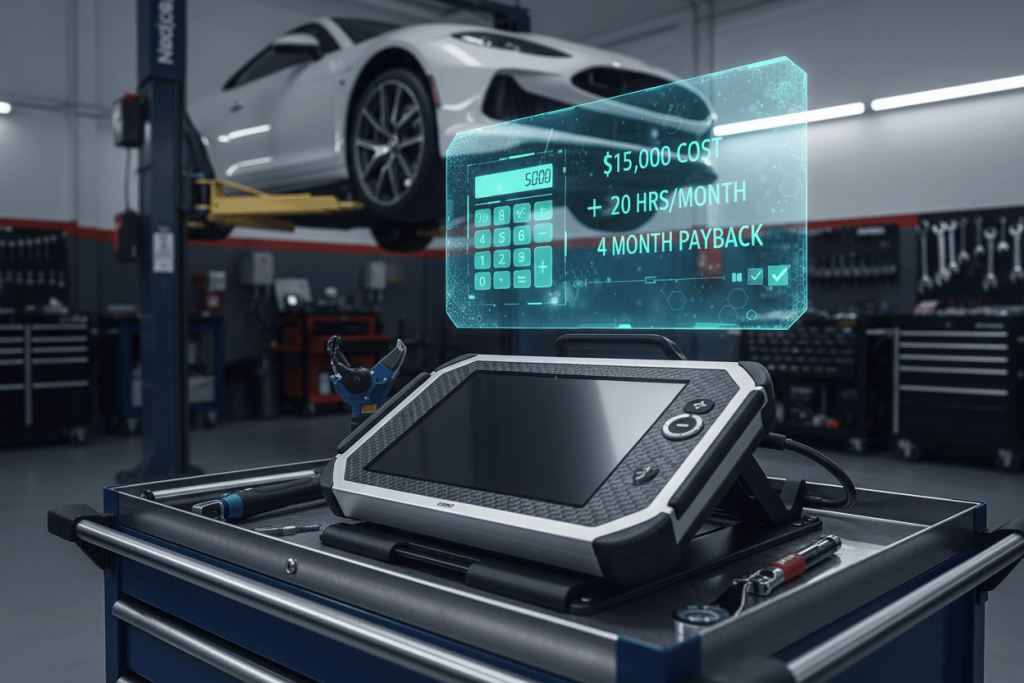
Stop Losing Money on Equipment: The ROI Framework for Smart Diagnostic Tool Investments
The diagnostic tool salesman just quoted you $15,000 for equipment that would “expand your capabilities”—but will it actually expand your profits? Most auto repair shop owners buy equipment based on what they might need someday instead of what generates revenue today. The result is thousands of dollars sitting on your tool cart that hasn’t paid […]
How Modern Shop Management Technology Pays for Itself in Less Than 6 Months
Most auto repair shop owners resist new technology because they see the monthly cost without calculating what inefficiency is already costing them. You’re losing money right now to manual processes, missed appointments, communication gaps, and jobs that take longer than they should. The question isn’t whether technology costs money—it’s whether it costs more or less […]