

Auto Repair Advertising Flyers: Ideas, Examples & Tracking Guide
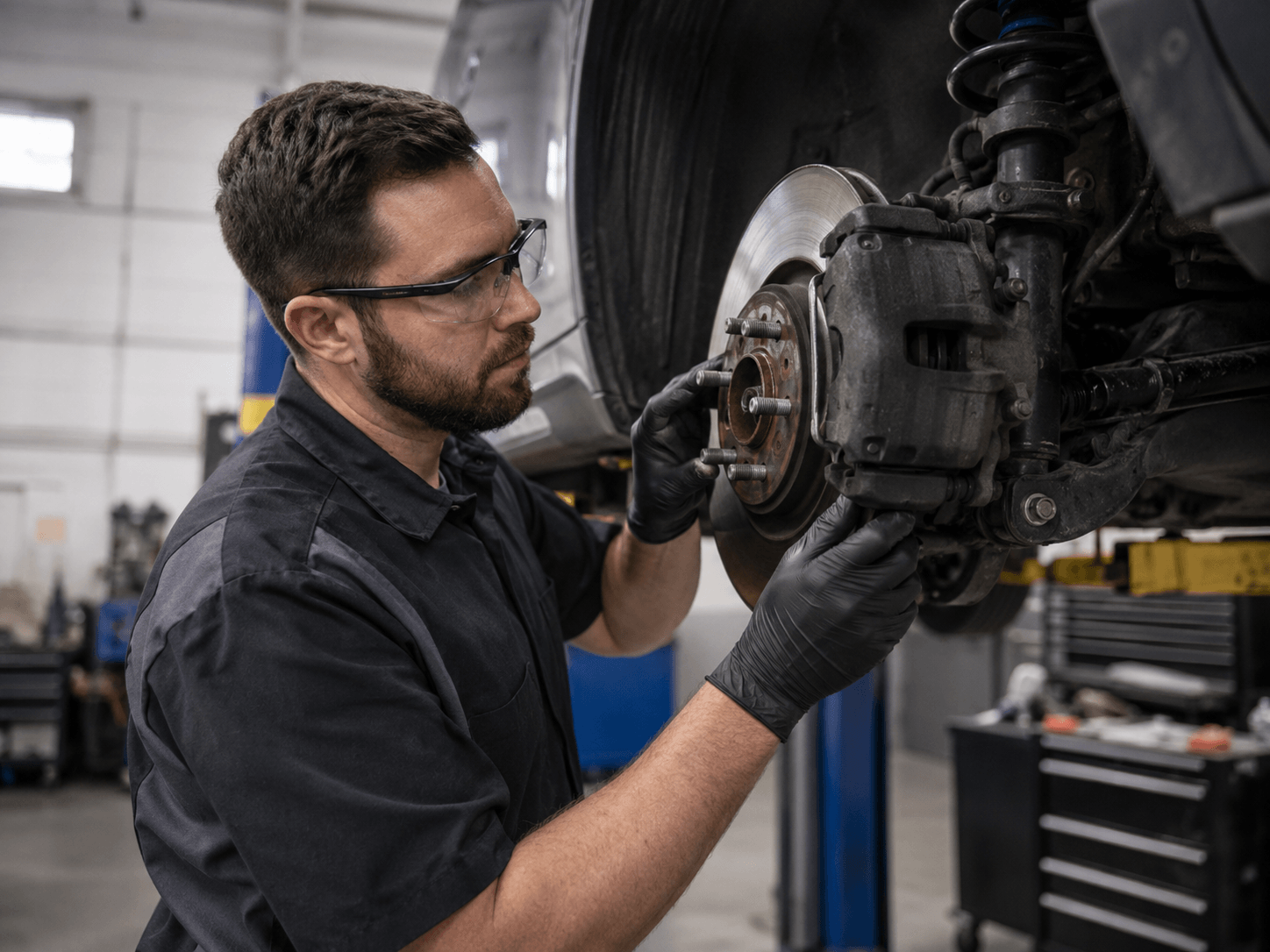
Auto repair advertising flyers work best when they give a nearby driver one credible reason to choose a shop and one simple way to respond. They are local decision aids: what the shop helps with, why it is trustworthy, and what the driver should do next.
The strongest campaigns pair a specific service need with a reachable neighborhood, supportable proof, and a measurable call or QR path.
Contents:
- What an Auto Repair Flyer Must Accomplish
- Choose One Neighborhood, One Service Need, and One Response
- Use a Trust-First Message Instead of a Bigger Discount
- Build the Flyer Around a Single Service Bundle
- A Flyer Layout That Makes the Call Path Obvious
- Three Ready-to-Adapt Flyer Concepts
- Track Flyers by Route, Message, and Outcome
- Use QR Codes to Continue the Same Customer Conversation
- Distribution Options and Their Tradeoffs
- Calculate the Campaign Before You Print
- The 10-Point Auto Repair Flyer Preflight
- Common Flyer Mistakes That Create the Wrong Response
- FAQ
- Make the Flyer a Measurable Local Test
What an Auto Repair Flyer Must Accomplish
Someone may see a flyer while leaving a local business, sorting mail, or waiting at a community location. They will not read a long explanation. The piece should make the next step understandable in a glance, then give enough trust evidence for a driver to keep it or scan it later.
| Decision | What the flyer needs to answer | Useful proof | Avoid |
|---|---|---|---|
| Is this shop relevant? | Name one service need, vehicle group, or seasonal concern. | A clear service description and accurate service area. | A long list of every repair the shop has ever performed. |
| Can I trust it? | Show why a first visit is low-friction and credible. | Real certifications, warranty terms, years in business, or a documented process. | Unverified rankings, invented testimonials, or vague ‘best shop’ claims. |
| What should I do? | Give one primary response path. | Large phone number, short booking URL, or QR code with a clear destination. | Three equal-size CTAs that make the reader choose the channel. |
| Why act now? | Connect timing to a real maintenance or inspection need. | Season, road-trip timing, inspection due date, or limited appointment capacity when true. | False urgency or a discount that has no stated terms. |
Choose One Neighborhood, One Service Need, and One Response
Start by narrowing the campaign. Choose an area the shop can serve, a service theme that fits capacity, and a response path the front desk can handle. The target may be a neighborhood, commuter corridor, nearby employer, permitted apartment community, or local partner location. Follow local property and distribution rules before placing handbills.
| Campaign situation | Flyer focus | Primary response | Operational check |
|---|---|---|---|
| New shop or newly expanded service area | Convenient local auto care and how to book a first visit. | Call or booking page. | Can the team describe the first-visit process consistently? |
| Seasonal maintenance window | A pre-trip, heat, cold, brake, tire, or inspection check that the shop offers. | Request the named service. | Is the service and appointment capacity actually available? |
| Specialty capability | The verified vehicle type or repair category the team handles. | Ask about the service. | Can the adviser explain scope and limits without overpromising? |
| Reactivation near the shop | A trust-first reminder of routine care and local convenience. | Scan to a service page or call. | Is the landing page accurate and mobile-friendly? |
For a mail route rather than hand distribution, review the USPS Every Door Direct Mail overview and confirm the route, format, and preparation requirements before printing.
Use a Trust-First Message Instead of a Bigger Discount
A discount can be legitimate, but it should not carry the whole message. Price-only offers can attract inquiries that do not fit the work. A better flyer reduces real hesitation about capability, inspection, convenience, or fair treatment.
| Weak message | Trust-first alternative | Why it is stronger |
|---|---|---|
| Lowest prices in town | Clear estimates before approved work, for services where that is the shop’s actual policy. | Names a process a customer can verify. |
| 20% off everything | Schedule a seasonal inspection or maintenance service with stated scope and terms. | Connects the action to a real service decision. |
| All makes, all repairs | Independent service for the makes and repairs the team is prepared to handle. | Keeps the promise aligned with capability. |
| Call now! | Call to ask about [named service], or scan to see what the first appointment includes. | Makes the next step specific and easier to take. |
Marketing claims should be truthful and supportable. The FTC’s advertising and marketing guidance is a useful baseline for reviewing claims, testimonials, price statements, and offer terms.
Build the Flyer Around a Single Service Bundle
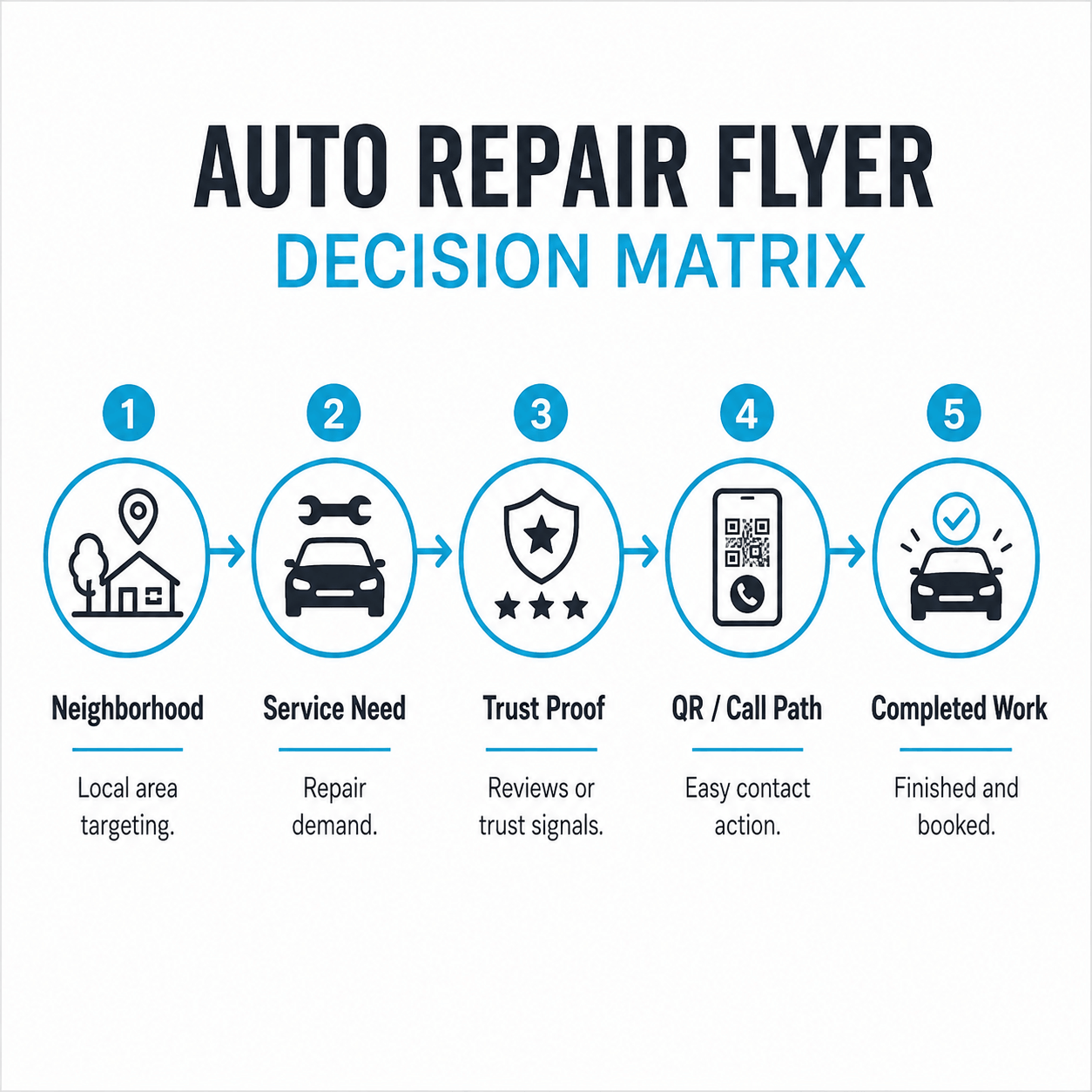
A service bundle is not a made-up package of unrelated repairs. It is a customer-friendly way to describe one appointment theme the shop can deliver. For example, a road-trip readiness appointment may describe the actual inspection or maintenance items the adviser can schedule. A brake-focused flyer can explain that a technician evaluates the concern before recommending work. State what is included, what requires inspection, and any limits or terms.
| Flyer theme | Headline direction | What to include | What not to imply |
|---|---|---|---|
| Brake concern | Brakes should feel dependable. Start with an inspection. | Symptoms the driver may notice, inspection path, and booking contact. | That every brake concern has one repair or one price. |
| Road-trip readiness | Plan the service visit before the miles add up. | Relevant verified inspection or maintenance scope and timing. | That an inspection guarantees a trouble-free trip. |
| Dealer alternative specialty | Independent service for [verified make or category]. | Actual capability, appointment process, location, and proof. | Dealer-level claims the shop cannot substantiate. |
| Routine maintenance | Keep the next service visit simple and local. | Maintenance services, clear location, and one booking path. | A universal service interval for every vehicle. |
A Flyer Layout That Makes the Call Path Obvious
Design should direct attention rather than decorate the page. Lead with the service message, reserve enough space for the next step, and use a real shop photo only when it supports the promise. A QR code is useful only when it takes the driver to a short, relevant page with the same message, phone number, and a clear booking action. Do not send a flyer QR code to a homepage that forces the visitor to search again.
- Put the primary headline and service need at the top where it can be understood at a glance.
- Add one short proof block: verified specialty, process, warranty policy, credentials, or local history that the shop can support.
- Explain the response: call, use a short URL, or scan a QR code. Make one path primary.
- Show address, service area, hours only if current, and the information needed to reach the shop.
- Include offer terms or service boundaries in readable type; do not hide conditions that change the meaning of the promotion.
- Test the QR code on a phone, call the listed number, and have someone unfamiliar with the campaign explain the flyer back to you before printing.
Three Ready-to-Adapt Flyer Concepts
Use the copy pack as a starting point, then replace every bracketed item with shop-approved scope, terms, contact details, and a matching QR destination. Each concept is service-specific, not a generic repair-shop ad.
| Campaign | Headline direction | Proof and CTA |
|---|---|---|
| Brake inspection | Brake concerns? Start with an inspection. | State the approved inspection path. Call [phone] or scan for the brake-service page. |
| Road-trip readiness | Plan the next service before the miles add up. | Name the actual seasonal service scope. Scan to see what the appointment includes. |
| Verified specialty | Independent service for [verified makes or category]. | Name the real capability and limits. Call to ask about the appropriate service. |
Track Flyers by Route, Message, and Outcome
A flyer campaign cannot be improved if every version has the same phone number, generic landing page, and no record of where it was distributed. Tracking does not require complicated attribution. Give each route or message a simple identifier, use a unique QR destination or short URL where possible, ask callers how they heard about the shop, and record the result through appointment and completed work.
| Tracking element | Example | Decision it supports |
|---|---|---|
| Route ID | NORTH-APR or a neighborhood name in the campaign tracker. | Which distribution area produced suitable inquiries. |
| Message ID | BRAKE-INSPECT versus ROADTRIP-CHECK. | Which service message created the better customer fit. |
| QR or short URL | A dedicated page with the same flyer headline and booking path. | Whether scans become calls or appointment requests. |
| Call question | How did you hear about us? | Whether callers mention the flyer, partner site, or another source. |
| Outcome record | Inquiry, qualified appointment, completed work, and gross profit. | Whether to repeat, revise, or stop the campaign. |
For the telephone side of attribution, use a defined intake process and the principles in automotive call tracking. Do not treat scans or calls alone as campaign success when the work was not a fit.
Use QR Codes to Continue the Same Customer Conversation
The flyer and landing page should agree. If the flyer promotes brake inspection, the scan should land on a page that explains the shop’s brake-service scope, the inspection process, and how to contact the shop. It should not open an unrelated promotion or a long generic article. Use the landing page to answer the questions that did not fit on paper, then repeat the same primary CTA.
- Match the flyer headline, service theme, and trust proof on the landing page.
- Make the phone number tappable and the appointment path short on mobile.
- Add the campaign and route identifier to the QR destination so results can be compared.
- Check the page before each print run for current hours, services, pricing terms, and capacity.
- Use a service page for service intent; do not route a flyer to a broad marketing or company-news post.
A complete local service page and technically sound local discovery path are covered in SEO for auto repair shops. Keep service-intent messaging on the relevant commercial page; this article remains an informational guide to flyer planning and measurement.
Distribution Options and Their Tradeoffs
| Distribution method | Best use | Strength | Control to add |
|---|---|---|---|
| Direct mail route | A defined residential area near the shop. | Consistent household coverage for the chosen route. | Route ID, mail date, and dedicated QR destination. |
| Local partner counter | A business with a relevant, permitted audience. | Context and local trust through the partner. | Written permission, restock date, and partner code. |
| Community event | A legitimate local event with a service-relevant audience. | Conversation plus physical reminder. | One event-specific version and staff intake script. |
| Door hanger or handbill | Only where permitted and respectful of property rules. | Direct local visibility when distribution is legal and targeted. | Distribution map, compliance check, and response code. |
For a deeper look at route selection, creative, mailing cadence, and retention uses, see auto repair direct mail marketing. Keep the flyer campaign’s unique route and outcome tracking rather than copying a generic mail cadence.
Calculate the Campaign Before You Print
Before approving a print quantity, define the cost and decision threshold. Include design, printing, distribution, landing-page work, staff time, and offer cost. Decide what qualified appointments and completed jobs must contribute for the test to be worth repeating. This model does not promise a fixed route response rate.
| Input | Record | Why it matters |
|---|---|---|
| Campaign cost | Design + print + distribution + staff time + offer cost. | Prevents an incomplete ROI calculation. |
| Distribution count | Pieces actually mailed or placed, by route. | Lets the shop compare routes fairly. |
| Qualified appointments | Appointments for work the shop offers and can schedule. | Separates curiosity from suitable demand. |
| Completed work | Closed jobs and gross profit, recorded with the campaign ID. | Supports repeat-or-stop decisions. |
| Learning note | Message, route, objection, and operational issue. | Turns one campaign into a better next test. |
Use the Ads Revenue Calculator as a starting point for modeling lead cost and revenue assumptions, then replace assumptions with the shop’s actual calls, appointments, and completed work.
The 10-Point Auto Repair Flyer Preflight
- One defined neighborhood, partner location, event, or mail route is documented.
- The flyer names one service need or a verified service bundle, not every possible repair.
- Every trust claim, credential, price statement, and offer term is current and supportable.
- The phone, address, hours, booking link, and QR code have been tested.
- The QR code opens a mobile page that repeats the flyer message and primary CTA.
- The front desk knows the campaign name, service scope, and how to record the source.
- Each version has a route or message ID in the tracking sheet.
- Distribution permission and local rules have been checked for the chosen method.
- The campaign cost, capacity, and success threshold are documented before printing.
- The owner has scheduled a review of qualified appointments and completed work, not only scans.
Common Flyer Mistakes That Create the Wrong Response
- Using a generic ‘we do it all’ headline that gives the reader no reason to keep the flyer.
- Leading solely with a discount, then attracting price-only inquiries the shop cannot profitably serve.
- Promising service capability, turnaround, savings, or a diagnosis the shop cannot verify.
- Sending a QR code to a generic homepage, broken form, or unrelated campaign page.
- Placing flyers without permission or without checking local distribution restrictions.
- Printing a large quantity before testing the message, route, call process, and tracking method.
- Counting all calls as success without recording the service requested, appointment result, and completed work.
FAQ
What should an auto repair flyer include?
Include one service message, a supportable trust signal, the shop’s accurate contact details, and one clear response path. Add readable terms when an offer or service boundary needs explanation.
Do auto repair flyers need a discount?
No. A flyer can lead with a verified service, inspection process, local convenience, specialty, or trustworthy first-visit experience. Use an offer only when its scope and economics are clear.
Where should an auto repair shop distribute flyers?
Choose a defined nearby route, permitted local partner, community event, or other lawful placement that matches the campaign audience. Document the distribution area so results can be compared.
How do I track auto repair advertising flyers?
Assign each route and message an ID, use a dedicated QR destination or short URL, ask callers how they heard about the shop, and track inquiries through qualified appointments and completed work.
Should a flyer link to a service page?
Yes, when the flyer promotes a specific service. The scan destination should explain the same service, set expectations, and make calling or booking easy. A generic homepage usually adds friction.
Make the Flyer a Measurable Local Test
A useful auto repair flyer is specific enough to earn attention, credible enough to keep, and measurable enough to improve. Start with one neighborhood and one verified service need. Replace vague hype with proof and a clear first step. Then use route, message, QR, call, appointment, and completed-work records to decide what to repeat.
For a broader channel inventory after the flyer test is defined, see auto repair shop marketing ideas. Shops that need help connecting local promotion, service pages, calls, and booked work can review auto repair lead generation.