

The Compliance Checklist Every Multi-Bay Shop Owner Needs to Avoid Costly Fines
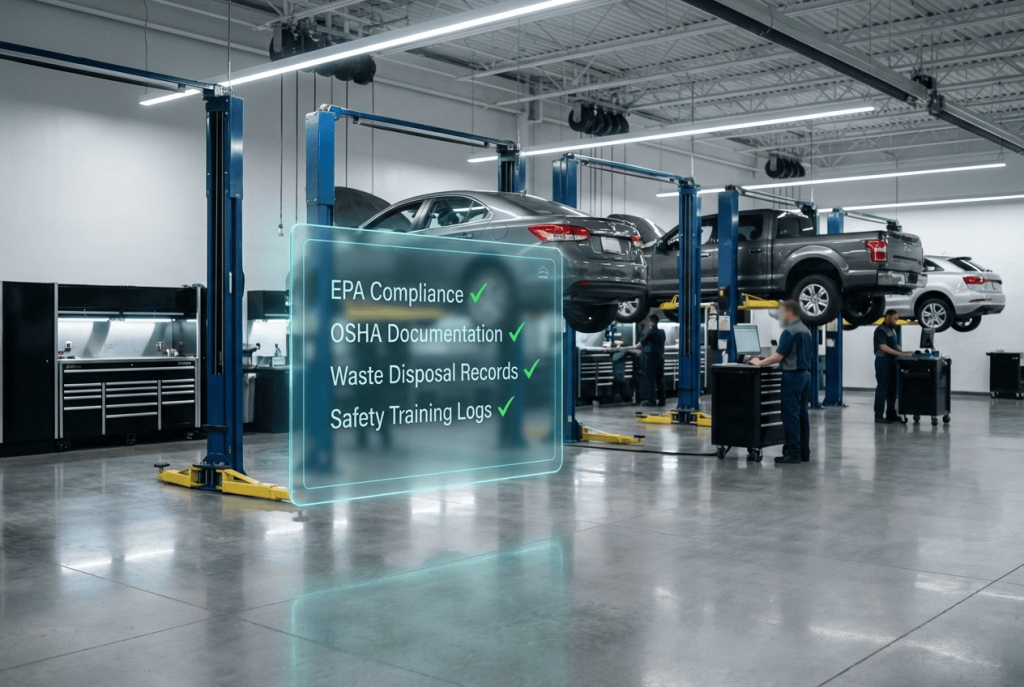
Most auto repair shop owners I talk to have the same fear: a surprise inspection that shuts down their operation for days or results in fines they can’t afford.
You’re focused on turning wrenches and keeping customers happy, but one missed compliance requirement can cost you thousands in fines—or worse, force you to close your bays until violations are corrected. The shops that stay operational year-round aren’t necessarily doing anything complicated.
They’re just meeting specific regulatory requirements that keep inspectors satisfied.
By the end of this article, you’ll know exactly which compliance areas demand your attention and what you need to have in place to avoid costly penalties that eat into your profit margins.
Contents:
How a Professional Website Signals Compliance to Customers
The first thing we suggest auto repair shop owners do is invest in professional website creation, because it’s one of the services we offer our paying clients at Element DMA, and we see its impact firsthand on customer perception of legitimacy and trustworthiness.
Here’s what most shop owners miss: customers research shops online before calling, and your website communicates whether you run a professional, compliant operation or a fly-by-night business. A modern website with clear policies, professional presentation, and transparent business practices signals that you operate by the book.
When customers see outdated websites or no website at all, they wonder what else you’re cutting corners on. Are you disposing of waste properly? Do you follow safety regulations? A professional web presence answers these questions before they’re asked. This matters particularly for commercial fleet accounts that require vendors to meet compliance standards—they won’t even consider shops without professional online representation.
The shops that work with us at Element DMA understand that appearing compliant to customers matters as much as being compliant with regulators. Professional website presence demonstrates you’re a legitimate business operating within regulations, which builds trust before customers ever call.
The Documentation That Protects You During Inspections
Beyond your customer-facing presence, the biggest compliance issue across multi-bay shops is missing paperwork that proves you’re following regulations.
OSHA requires specific documentation for employee safety training, hazard communication programs, and injury logs. When an inspector walks in, they want to see written proof that your technicians know how to handle hazardous materials safely. Without documented training records, you’re vulnerable to citations even if your team follows every safety protocol perfectly.
EPA waste disposal documentation is equally critical. You need manifests proving hazardous waste was transported by licensed haulers, records of waste oil and antifreeze disposal, and documentation of your underground storage tank testing if you have fuel tanks. Shops that track this monthly instead of scrambling before inspections stay compliant without stress.
Your hazard communication program needs a written plan, up-to-date Safety Data Sheets for every chemical in your shop, and records showing employees received training on the hazards they might encounter. Missing any of these documents during an inspection typically results in immediate violations.
Five More Compliance Areas That Trigger Fines
EPA Air Quality Requirements: If you paint or use solvents, you need permits for air emissions and records proving you’re within allowable limits. Even smaller operations often need permits they don’t realize apply to them.
OSHA Personal Protective Equipment Standards: Document that you provide required PPE and train employees on proper use. Gloves, safety glasses, respirators for specific tasks—all need written protocols.
Stormwater Management: Shops with outdoor areas where vehicles are serviced need stormwater pollution prevention plans. Oil, antifreeze, and other fluids can’t reach storm drains.
Used Oil Management: Track every gallon of used oil generated and disposed of. Storage tanks must meet specific requirements, and you need contracts with licensed recyclers.
Employee Right-to-Know: Post required notices about workplace safety, wage and hour laws, and workers’ compensation. Missing posters are easy violations inspectors catch immediately.
What You Can Do Right Now
- Create a compliance calendar tracking when documentation expires and needs renewal
- Maintain organized files with OSHA training records, EPA waste manifests, and permit renewals
- Conduct monthly self-audits using the same checklists inspectors use
- Verify all required workplace safety posters are current and displayed
- You can also contact our team at Element DMA to see how we can bring your shop 100+ qualified calls per month and help your shop rank in the top 3 local search results
To Summarize…
The best ways for your shop to avoid costly compliance fines is to maintain proper documentation for all regulatory requirements, conduct regular self-audits, and present a professional image through your website that signals to customers you operate a legitimate, compliant business—including working with Element DMA to establish that professional online presence.
All the auto repair shops that work with us at Element DMA have professional websites that signal trustworthiness and compliance to potential customers. Once you implement these compliance systems and combine them with a strong online presence, you protect your revenue stream and build the trust that keeps customers coming back.

With a background in psychology, Valeriu has worked in sales and marketing for 8+ years, and learned through experience that the best way to do business is to serve clients well, and solve their problems. He has joined Element DMA in September of 2025, attracted by the honest nature of the work and attitude of auto & truck repair shops. In this role, he helps shop owners across the U.S. see the ROI of properly done advertising, and the growth this brings to their shops, regardless of niche or state.